How long does SEO take to work? The internal timings Google shared in 2026
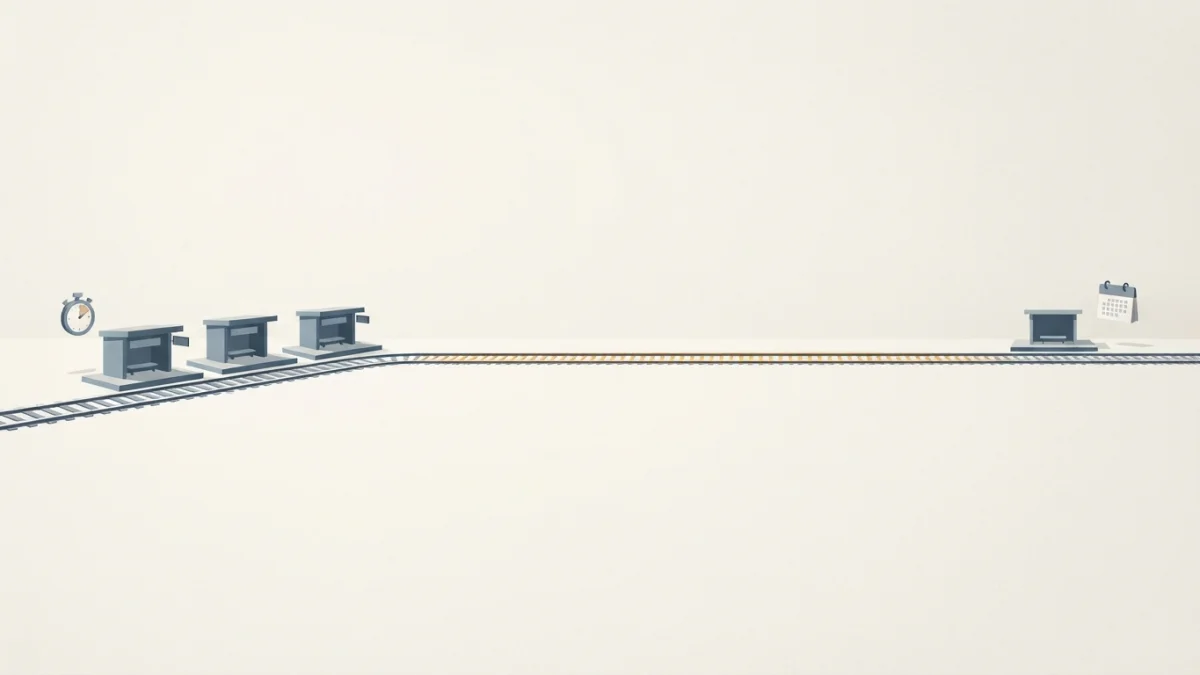
Table of contents
On October 2, 2026, Google answered in Barcelona the question every client asks: how long does SEO take? Hours for technical work, months for rankings, and that gap explains almost every argument.
First the numbers, then what they mean and how to use them to decide whether something is slow or broken.
The short answer: there is no single timeline, there are four clocks
When someone asks how long does SEO take to work, the question hides four different processes running at different speeds. Mixing them up is where most frustration comes from:
- Crawling: Google discovers the URL and fetches it.
- Indexing: it parses the page, understands it and files it in the index.
- Serving: it shows the page with the new title, snippet and image.
- Ranking: it decides which position you get and against whom.
The first three are mechanical and are measured in hours or weeks. The fourth is competitive: it depends on accumulated signals, on competitors and on domain authority, so it is measured in months or years. When someone says "SEO doesn't work", they are almost always timing clock one with clock four's stopwatch.
How long does SEO take according to Google: the internal timings from October 2026
At the October 2, 2026 session of Search Central Live Deep Dive Europe in Barcelona, Gary Illyes of Search Relations projected Google's internal timings for each process, separating the typical time from the slowest one. The numbers were captured in John Campbell's recap (ROAST) and covered by Search Engine Roundtable and Search Engine Journal.
| Process | Typical | Slowest |
|---|---|---|
| Discovering a new URL | ~20 hours | Weeks, or never |
| Re-crawling a known URL | ~30 days | Weeks, or never |
| Sitemap processing | ~24 hours | Up to 14 days, or never |
| Indexing end to end | ~1.5 hours | Months, or never |
| Canonical change | 1-3 weeks | Months |
| Title or snippet update | 1-2 days | Weeks to months |
| Removing a URL (Search Console) | ~2 hours | 24 hours |
| Manual action removal | 1-2 weeks | 4-6 weeks or more |
| Site move | 1-3 months | 6 months to 1 year+ |
| Core update recovery | 3-6 months | 6 months to 1 year |
Outside the table: core updates take two to four weeks to finish rolling out, spam updates take one or two days, and a small site move can be done in weeks if the structure stays the same.
How to read that table without fooling yourself
What it does give you: real orders of magnitude, enough to tell whether a change is within normal range or has already blown past the deadline. What it does not give you matters just as much: there is no published sample, no measurement period and no operational definition of "typical"; the recap does not even include the fastest times; and the slides were not on Google's site on the date of the report. Illyes himself framed it as "an exercise to see if the audience can relate to the numbers we pulled internally".
Second trap: these processes are chained. A page cannot be indexed until it has been crawled, so delays add up instead of running in parallel. And crawl capacity can drop within seconds if the server gets slow or starts returning 5xx errors.
Crawling is not indexing, and indexing is not ranking
Google's official documentation is blunt about it: crawling can take anywhere from a few days to a few weeks, and requesting a crawl does not guarantee that inclusion in search results will happen instantly "or even at all". There is also a quota, and repeating the request does not speed anything up. A crawled URL is not an indexed URL, and an indexed URL is not a well-ranked one: three states, three different checks. The URL Inspection tool in Search Console shows the exact state, and that state tells you which clock is running.
The "sandbox" does not exist, but the effect is real
The myth started in the 2000s. John Mueller has debunked it several times: there is no filter that deliberately promotes or demotes new content. What happens is that Google does not have enough signals about a freshly published page, so it estimates (sometimes conservatively, sometimes optimistically) and then settles once real data arrives. There is no penalty for being new: there is a lack of evidence, and evidence is built with links, real usage and content that holds up against what is already ranking.
What the data from two million pages says
The Ahrefs study (Patrick Stox, updated May 2025 with 2023 data) puts numbers on the competitive half:
- Of one million URLs seen by their crawler in September 2023, only 1.74% reached the top 10 within a year (5.7% in 2017).
- In a fairer sample of two million URLs with non-empty English content, 6.11% made it.
- Of those that made it, 40.82% did so in the first month: if a page is going to rank fast, it usually does so early.
- 72.9% of top 10 pages are more than three years old, and the number one page is five years old on average.
- 94% of pages never ranked for a high-volume term.
One operational rule falls out of it, and the study states it too: if you are not in the top 10 after about six months, update the content; waiting longer rarely changes it. Google's timings explain why a change reaches the index; this data explains why it does not reach the top 10.
Realistic timelines by type of change
- New title and meta description: one or two days typical; up to weeks if Google rewrites the snippet.
- Fixing a noindex or a blocking robots.txt: about 24 hours for the robots.txt, then the indexing queue, which is days.
- Consolidating duplicates with a canonical: one to three weeks. Google may keep pages for up to two weeks in the duplicate cluster after the fix.
- Domain or URL migration: one to three months typical, up to a year at worst, and it is not finished until the old URLs stop getting clicks. See website migration without losing rankings.
- Core Web Vitals: field data uses a rolling 28-day window, so a fix takes about four weeks to show up. See Core Web Vitals.
- Core update: three to six months to recover in the typical case, or until the next core update (how to recover).
- Authority and links: no short timeline. It is the only clock measured in quarters or years.
Who measures what: the technical team checks crawling and indexing in days; the business checks rankings and clicks in quarters. Asking for a ranking report after one week is asking for the result of a clock that is not yours.
Is it slow or is it broken?
Five checks, all data-driven:
- Is it indexed? URL Inspection. If it says "Discovered - currently not indexed", the clock running is crawling, not ranking.
- When did the selected canonical change? Compare it against the one-to-three-week window.
- Are there manual actions? If so, the review timeline rules, not the content one.
- Is the server healthy? High TTFB or 5xx errors throttle crawling within seconds.
- Are pages competing with each other? Cannibalization stretches any timeline, because Google has to pick which of your URLs deserves the slot.
What does speed things up: internal links to the new page (orphan pages never get discovered on their own), an updated sitemap, a stable server and content that answers the intent better than whatever holds the top spot today.
What does not: IndexNow is not used by Google; repeatedly requesting indexing burns quota; and buying "instant indexing" is snake oil. If you are evaluating a provider, the question Google itself recommends asking is "what kind of results do you expect to see, and in what timeframe?"; how to read the answer is covered in hiring an SEO specialist.
A 90-day plan with expectations in writing
- Days 0-7: check indexing and crawling, fix blockers, submit the sitemap and write down the baseline (clicks, impressions and average position per URL).
- Days 8-30: technical and snippet changes, measured against Google's own timings. Here weekly progress reports are fair.
- Days 31-90: new content and intent fixes. First ranking data appears. At six months, review the pages that never made the top 10 and decide whether to update or consolidate.
- Second quarter onwards: authority, links and consistency. This is where the top 10 is won and where most people quit.
Bottom line
Technical work is measured in hours and days; rankings, in months and years. There is no sandbox, only a lack of signals; and no indexing shortcut, only groundwork done well. SEO is not slow by design: it competes against pages that have been accumulating signals for years. Knowing which clock you are reading is half the job.