Bing SEO: how to rank on Bing and get cited by Microsoft Copilot (2026 guide)
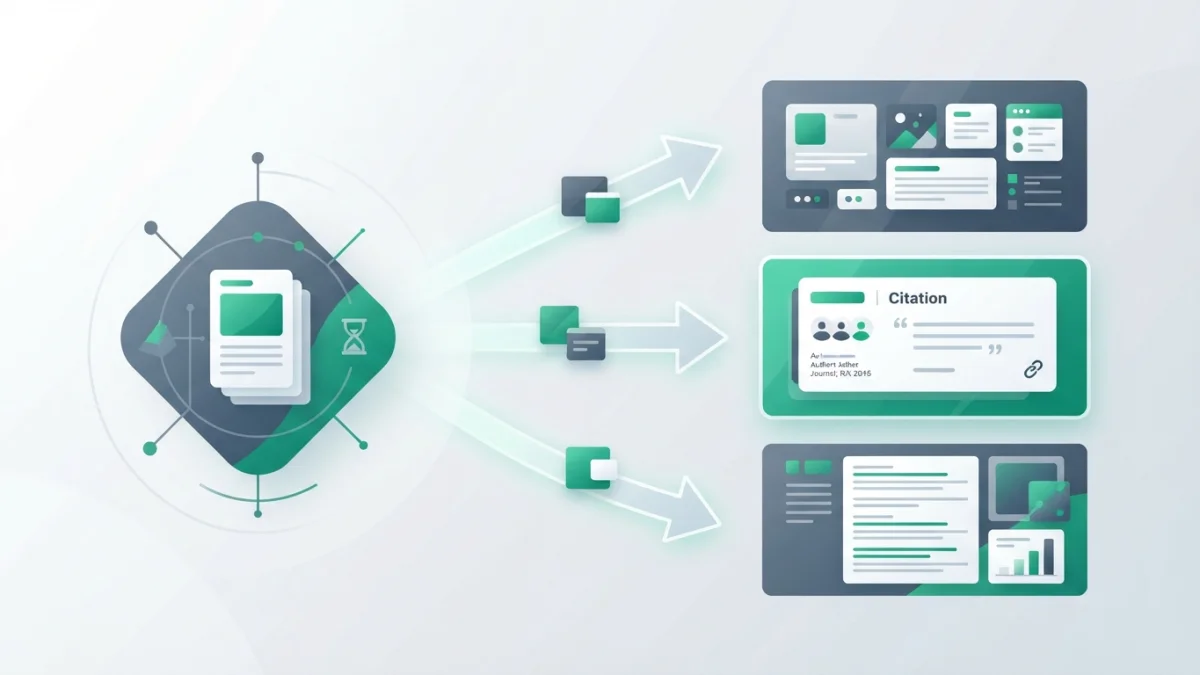
Table of contents
Bing's index doesn't just power Bing: it also answers inside Copilot, Microsoft Start and partner search engines. This Bing SEO guide covers what is in your hands and what is not.
Why Bing matters more than it looks
According to StatCounter, in August 2026 Bing held 4.55% of worldwide search share and 8.91% on desktop, against Google's 91.02% and 85.94%. It is not "the new Google": it is an extra channel with a low cost of coverage.
The decisive argument isn't the share, it's what Bing's index feeds. Microsoft puts it like this: Bing's search index powers experiences such as Microsoft Copilot and Microsoft Start, which together handle billions of queries every month (Microsoft Advertising, October 2025). On top of that, on 10 February 2026 Bing launched the AI Performance report in Bing Webmaster Tools, with AI citation data it described as an early step toward Generative Engine Optimization (GEO) tooling.
What this guide does not promise
Nobody can guarantee you a citation in Copilot, and Microsoft says so plainly: there is no secret sauce that guarantees selection in AI answers, only practices that improve eligibility. And ranking on Bing does not cost you anything in Google: they are separate indexes with shared fundamentals (topical authority).
How Bing indexes your site: sitemaps with real lastmod, plus IndexNow
Bing processes sitemaps at least once every 24 hours, so there is no need to resubmit them daily. What matters is lastmod with date and time in W3C format, for example 2026-09-18T09:30:00-03:00. Bing ignores changefreq and priority, and it flags a frequent mistake: never use the sitemap generation date when the content did not change. The format details are in how to set up an XML sitemap.
The companion is IndexNow, which notifies the search engine when you publish or change a page: Bing takes part, Google does not. It complements the sitemap rather than replacing it; Bing states in those exact terms that sitemaps remain a foundational signal (IndexNow step by step).
Three lesser-known fine-grained controls: data-nosnippet, supported by Bing since October 2025, keeps content indexed but out of AI summaries; Block URL removes a URL for up to 90 days; and Crawl Control schedules bingbot visits.
Selection signals: Bing does not index everything it crawls
The Bing Webmaster Tools help centre says it bluntly: a page may stay out of the index if it has not accumulated sufficient ranking signals, such as links or traffic, evaluated relative to the rest of the web. A new page with no internal links can be left out even when it is crawlable.
Practical differences from Google
Bing uses signals Google downplays (lastmod with a timestamp) and has its own snippet and crawl directives. It does not require duplicating your strategy: it is the same site with two sets of instructions that should not contradict each other.
Bing SEO set up in 15 minutes: Bing Webmaster Tools
Onboarding is short because Bing can import the property. In order:
- Verify the site by importing from Google Search Console (it brings sitemaps along) or with a meta tag, file or DNS record.
- Submit the XML sitemap and confirm its status.
- Turn on IndexNow so every publish or update notifies instantly.
- Review indexing and crawling: excluded pages, 404s and 5xx errors, blocked resources, redirect issues.
- Use the free tools: Keyword Research with up to 16 months of data, backlinks with referring domains and anchor text, Site Scan, URL Inspection, Site Explorer, the robots.txt tester and Crawl Control.
- Take a baseline today: impressions, clicks and average position in Bing Search Performance, plus whatever citations you already have in AI Performance.
The toolkit is described in the official Bing Webmaster Tools blog, and the logic for reading those metrics is the one in how to use Google Search Console.
The structure that gets you cited by Bing and Copilot
The idea that organises this article comes from Microsoft: AI assistants do not read a page top to bottom, they break content into smaller, usable pieces through a process called parsing, and what gets assembled into the answer are those blocks, not the whole page.
That is why headings are structure: they mark where one idea ends and another begins, and Microsoft advises that they should match or reflect the page title.
The highest-yield pattern is question-and-answer pairs: assistants can often lift these word for word, so each answer must stand alone in one or two sentences. Then come the reusable formats (lists, numbered steps, comparison tables) and structured data, useful but not required according to Microsoft (rich snippets and schema).
Bing added its own list in the AI Performance announcement: headings, tables and FAQ sections surface key information, and data backed by cited sources builds trust. It also names what breaks parsing: answers hidden in tabs, critical data only in PDFs, key information only inside images, keyword stuffing, decorative punctuation and empty adjectives with no measurable claim behind them.
A refactor example: before and after
Picture a fictional store with an h2 reading "More information" and a paragraph mixing delivery times, costs and returns: nothing citable without rewriting it. After the refactor: an h2 asking "How long does peninsular shipping take?", a one-sentence answer and a table per zone. It is an example of structure, not of numbers.
Measuring: the AI Performance report, and what it is not
The report shows how often your content appears cited as a source in generated answers inside Microsoft Copilot, Bing's AI summaries and associated integrations, with total citations, grounding queries, citations per URL and a timeline. During 2026 it was expanded with Intents, Topics, Citation Share and Compare (Bing help centre).
Be clear about what these metrics are not: they are not a ranking, they do not measure authority, they are not traffic, and they do not expose competitor domains. Bing also warns that Compare does not explain why something changed: correlation is not causation, because demand, freshness, model versions and partner refreshes all move at once.
Use it as an observatory, not a business KPI: spot which pages are already cited, read the grounding queries to see which topics you are associated with and check again two to four weeks after a change; if a page is rarely cited, review its structure before touching keyword density. Pair it with Bing Search Performance (up to 16 months of history) and with server log analysis to see what bingbot really crawls.
Checklist: 10 actions for Bing and Copilot
- Verify your site in Bing Webmaster Tools, or import it from Search Console.
- Submit the XML sitemap with a
lastmodcarrying the real date and time. - Turn on IndexNow for publishes and updates.
- Review the indexing report: what is left out and why.
- Keep one
h2per idea andh3for nuances, with headings anyone can understand out of context. - Turn the key section into a question-and-answer pair with a one- or two-sentence answer.
- Add a table or a list for comparable data (timings, prices, specifications).
- Mark with
data-nosnippetwhatever you do not want AI to summarise. - Check that critical data lives in the HTML, not in PDFs or images with no alt text.
- Review AI Performance monthly and use Compare after every major change.
Common myths and mistakes
- "Bing doesn't matter": its index answers in Copilot and partner search engines, and its AI citation data is something nobody else gives you.
- "Optimising for Bing hurts Google": sitemaps, structure and internal linking serve both.
- "Bing won't index me": check selection signals, robots.txt and status codes before assuming a block.
- "AI means basic SEO no longer matters": Microsoft keeps repeating that crawlability, metadata and internal linking remain the foundation.
- "A llms.txt file gets you cited": neither Google nor Bing asks for it. Google says explicitly that you do not need machine-readable files or AI text files (Google Search Central).
- "Citations are my new KPI": treat them as an observatory and measure real traffic separately.
What is in your hands is unglamorous and verifiable: indexing, freshness, clear structure and citable facts. Bing, on top of that, measures it for you.